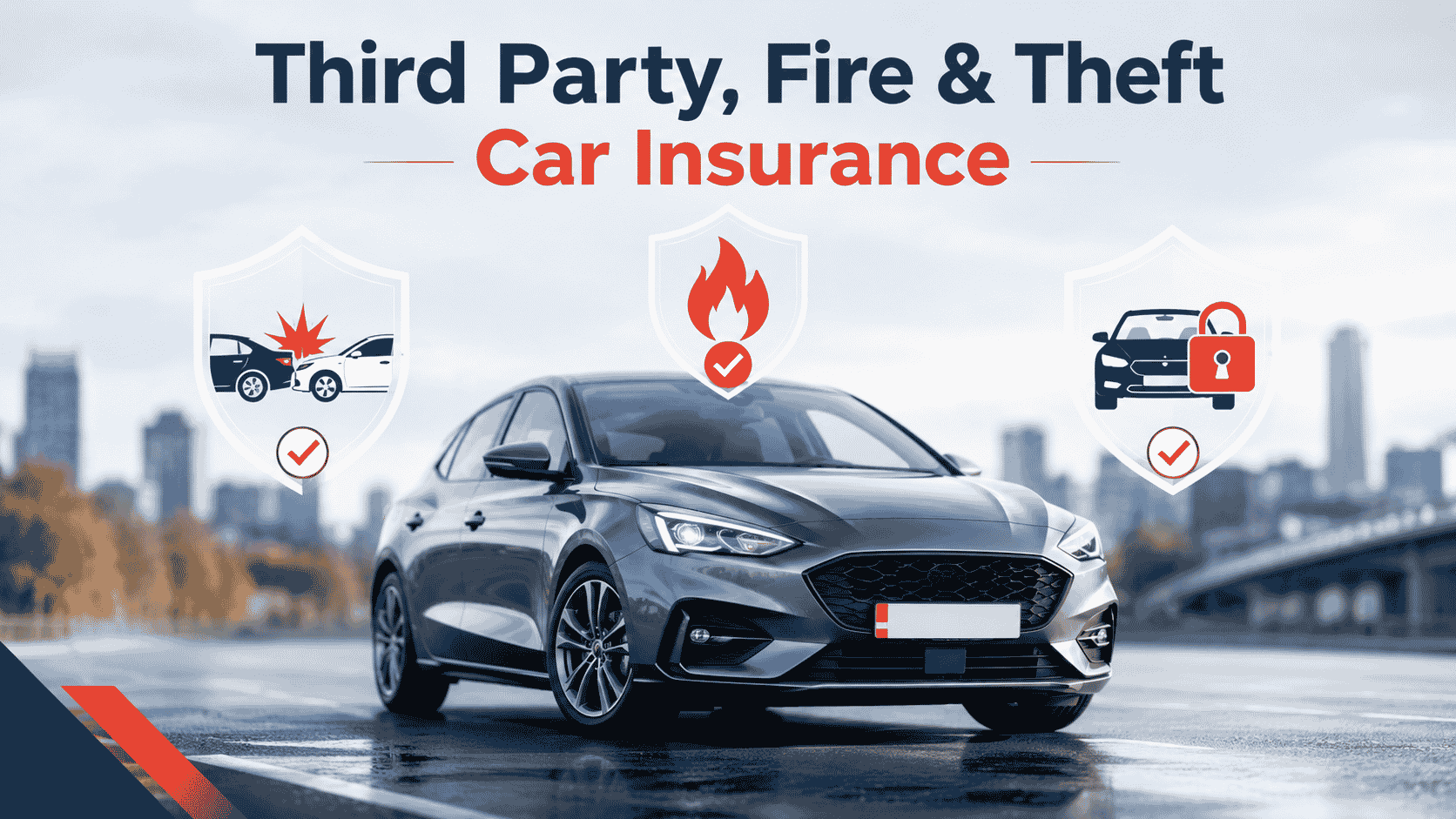
Third-Party, Fire, and Theft Car Insurance: What Is Third Party, Fire, and Theft Car Insurance Coverage?
Third Party, Fire and Theft (TPFT) car insurance is a type of car insurance policy that provides coverage for damages or losses caused to a third party, as well as for theft or fire-related damages to the policyholder's own vehicle. It covers the cost of any damage the policyholder does to the property, car, or person of a third party, but not to their own vehicle. However, it protects the policyholder’s vehicle against theft and fire, in addition to the mandatory third-party insurance. This allows the insured to file a claim for the money needed to repair their automobile after it has been stolen or damaged in a fire. On the other hand, third-party insurance offers coverage for damages or losses incurred by a third party as a result of an accident involving the policyholder’s car. Specifically, third-party insurance does not cover damage to the insured’s vehicle. Third Party, Fire, and Theft car insurance is often seen as a mid-tier insurance option since it offers more coverage than basic third-party insurance but less than comprehensive insurance. It is commonly selected by drivers with older or lower-value vehicles who need some protection without the higher costs associated with comprehensive coverage.
How to Get a Quote for Third Party, Fire, and Theft Car Insurance?
To get a quote for Third Party, Fire, and Theft Car Insurance, there are five steps. First, research insurance providers. Start by looking into companies that provide this type of insurance and check their reputation and client satisfaction. Next, gather information. Prepare the necessary details like the vehicle’s make, model, age, condition, as well as personal details, driving history, and insurance history. Third, contact insurance providers. You can get a quotation from insurance companies via phone, online, or at their local offices. Fourth, compare quotes. After obtaining quotes from multiple companies, compare the coverage and rates to find the best one that suits your needs and budget. Finally, purchase the insurance. Complete the process by filling out the application or signing up online.
What Is Covered by Third Party, Fire, and Theft Car Insurance?
Third-Party, Fire, and Theft Car Insurance covers third-party damages, fire, and theft. Third-party damages cover any losses or injuries caused to a third party in an accident where the policyholder is at fault. Additionally, Third-Party, Fire, and Theft insurance protects the vehicle in the event of a fire. This includes damage caused by a vehicle fire or harm caused by an exterior fire affecting the automobile. Lastly, it covers the vehicle if it is stolen, reimbursing the insured for its value, as specified in the policy.
Does Third Party, Fire, and Theft Car Insurance Coverage Cover Rental Cars?
Yes, Third-Party, Fire, and Theft Car Insurance Coverage covers rental cars. The insurance provider will pay for a rental car for the policyholder to use while their vehicle is being repaired, usually for up to 21 days. Additional coverage may be available through the rental agency, which provides extra protection above what is already included in the current policy. This typically covers theft, fire damage, and liability insurance in case of an accident.
Does Third Party, Fire, and Theft Car Insurance Coverage Cover Engine Failure?
No, Third-Party, Fire, and Theft Car Insurance does not cover engine failure. This policy doesn’t cover damages to the vehicle if the fire was caused by a mechanical, electrical, or electronic failure. Fire and theft coverage will protect the car if it is damaged or destroyed by fire, regardless of whether the fire was accidental or intentionally started by a third party. However, engine failure is typically seen as a mechanical breakdown, which is not covered by standard auto insurance policies. To protect against mechanical breakdowns, you may need to purchase an additional add-on coverage.
Does Third Party, Fire, and Theft Car Insurance Coverage Cover Windshield?
Yes, Third-Party, Fire, and Theft Car Insurance does cover windshields in certain cases. If the windshield is damaged or broken due to an insured event, such as a fire or theft-related incident, it may be covered. However, this policy does not provide comprehensive protection. Windshield damage caused by external factors, like flying debris or vandalism, may not be covered unless there is proof linking the incident to an accident involving another vehicle. Some providers offer additional coverage for glass damage and windscreen repairs under optional coverage.
Does Third Party, Fire, and Theft Car Insurance Coverage Cover Catalytic Converter Theft?
No, Third-Party, Fire, and Theft Car Insurance does not cover catalytic converter theft. While the policy may cover damage due to vandalism or attempted break-ins, it generally does not cover equipment theft, such as catalytic converters. For those living in areas where catalytic converter theft is common, more specialized coverage options like Catalytic Converter Insurance may be necessary. These policies specifically address theft risks related to catalytic converters.
What Is Not Covered by Third Party, Fire, and Theft Car Insurance?
Third Party, Fire, and Theft Car Insurance does not cover the following:
- Damages to the policyholder’s own vehicle, except in the case of fire or theft.
- Medical bills resulting from an accident.
- Mechanical breakdowns such as engine or transmission failure.
- General wear and tear on the vehicle.
- Damages caused by illegal activities, such as driving under the influence of alcohol or drugs.
- Personal belongings inside the vehicle.
What Is the Limit for Third Party, Fire, and Theft Car Insurance?
The limit for Third-Party, Fire, and Theft Car Insurance varies based on the vehicle's age, condition, type, and the specific policy. Insurance providers typically offer several levels of coverage, with limits ranging from approximately £17 million for third-party liability to smaller amounts for the vehicle's value, often capped around £8,295.90. Additional coverage may include repair costs, towing, and rental cars, with the latter typically covered for up to 21 days.
What Are the Third Party, Fire, and Theft Car Insurance Coverage Deductibles (Excess)?
The deductible, or excess, is the amount the policyholder must pay out of pocket before the insurer covers the rest of the claim. If a claim is made, the deductible amount is subtracted from the total payout. The deductible varies depending on the policy and insurer. The policyholder can choose a higher deductible to lower premium costs, but this means they will pay more out of pocket in case of a claim. The deductible generally applies to fire and theft claims, but not to third-party liability.
Why Does a Car Owner Need Third Party, Fire, and Theft Car Insurance Cover?
Car owners need Third-Party, Fire, and Theft insurance for several reasons:
- Protection against third-party liability in case of an accident.
- Coverage for fire damage, which can be costly to repair.
- Protection against theft, offering a replacement if the car is stolen.
- Peace of mind knowing that the most common risks, like theft and fire, are covered.
Although it is not as comprehensive as full insurance, which covers more risks and includes benefits like windscreen cover or breakdown assistance, Third-Party, Fire, and Theft insurance still provides significant protection for car owners who want to safeguard against frequent hazards at a more affordable price.
What Is the Difference Between Third-Party, Fire, and Theft Coverage and Fully Comprehensive Insurance?
The main difference between Third-Party, Fire, and Theft coverage and Fully Comprehensive insurance lies in the level of protection each provides. Third-Party, Fire, and Theft offers limited coverage, typically protecting against damage the insured causes to others' property, injuries to other individuals, fire damage, and theft. However, it does not cover the insured's own vehicle if they are at fault, nor does it cover damage from other hazards like weather or vandalism.
In contrast, Fully Comprehensive insurance includes coverage for third-party liability, damage to the insured's vehicle, and additional risks like weather damage, vandalism, and animal-related accidents. It also often offers extra benefits such as windscreen cover, roadside assistance, and other optional perks.
Third-Party, Fire, and Theft coverage tends to be less expensive than Fully Comprehensive insurance, as it offers fewer protections. The excess on a Third-Party, Fire, and Theft policy is typically higher, reflecting the reduced coverage. This type of insurance is often suited to older or lower-value vehicles, while Fully Comprehensive insurance is generally recommended for newer or more expensive cars, offering broader protection in case of accidents.
What Is the Difference Between Third-Party, Fire, and Theft Coverage and Personal Accident Insurance?
The key difference between Third-Party, Fire, and Theft coverage and Personal Accident insurance is the type of protection offered. Third-Party, Fire, and Theft primarily protects the policyholder against specific risks like damage to others' property, injury to others, fire damage to the insured's vehicle, and theft. It addresses legal liability for accidents caused by the policyholder.
On the other hand, Personal Accident insurance provides compensation for the policyholder or their passengers in the event of injury or death due to a car accident. This coverage helps with medical expenses, lost income, and other costs related to injuries or fatalities resulting from an accident.
Other differences include cost, coverage limits, and available optional add-ons. While Third-Party, Fire, and Theft insurance is typically more affordable than Fully Comprehensive insurance but pricier than Third-Party only coverage, Personal Accident insurance varies depending on coverage limits and the individual's risk profile. Third-Party, Fire, and Theft usually includes optional extras like roadside assistance, while Personal Accident insurance offers coverage for issues like disability or illness caused by an accident.
What Is the Difference Between Third-Party, Fire, and Theft Coverage and Third-Party Only?
The main difference between Third-Party, Fire, and Theft coverage and Third-Party Only coverage is the protection provided for the insured's own vehicle. Third-Party, Fire, and Theft includes the same protection as Third-Party Only, but with added coverage for the insured's vehicle in case of theft or fire.
Third-Party Only coverage covers the policyholder’s liability for damage to others’ property and injuries to other people. In contrast, Third-Party, Fire, and Theft offers more comprehensive protection, adding coverage for the insured’s vehicle in the event of fire damage or theft.
Third-Party Only insurance tends to be cheaper than Third-Party, Fire, and Theft, as it provides less coverage. Third-Party, Fire, and Theft is generally more appropriate for newer or higher-value vehicles, or those at greater risk of theft or fire damage. Third-Party Only is often a better choice for older cars with lower value or minimal risk of damage. Ultimately, the decision depends on personal preference, the value of the vehicle, and the level of protection the policyholder desires.
When to Drop Third-Party, Fire, and Theft Car Insurance?
It may be time to drop Third-Party, Fire, and Theft car insurance if the annual premium exceeds the vehicle's value. For newer models, this type of coverage may not be cost-effective. However, it can be a good option for older cars, which tend to suffer from electrical faults and are more prone to overheating, both of which can lead to fire damage.
Another scenario to consider is when the car loan has been paid off. Lenders typically require comprehensive coverage, but once the loan is cleared, the need for full coverage diminishes. If the policyholder has sufficient savings to cover repair or replacement costs in the event of theft or fire, they may choose to drop the coverage. Additionally, if the risk of theft or fire damage is low due to relocation or other factors, switching to Third-Party Only insurance may be a viable option.
Why Is Third-Party, Fire, and Theft Coverage Important for Car Insurance?
Third-Party, Fire, and Theft coverage is crucial because it offers additional protection for the policyholder’s vehicle, along with covering damage and injury to others. While Third-Party Only insurance covers legal liability for accidents caused by the insured, Third-Party, Fire, and Theft extends that coverage by safeguarding the insured’s vehicle against theft or fire. This added protection makes it a more costly option, but it provides greater peace of mind.
Is Third-Party, Fire, and Theft Car Insurance Necessary?
Third-Party, Fire, and Theft car insurance is not legally required in all areas, but it can be a wise investment depending on the circumstances. It's particularly beneficial for those with newer or more expensive vehicles, or those living in high-risk areas for theft or fire. If the car has low market value, if the owner has sufficient funds to cover repairs or replacement, or if they live in a low-risk area, it may not be necessary.
Is Third-Party, Fire, and Theft Car Insurance Worth the Price?
Yes, Third-Party, Fire, and Theft insurance is often worth the price due to the added protection it provides. It offers financial security in the event of an accident, theft, or fire, and often includes coverage for personal items in the car. The peace of mind it offers, especially in high-risk areas or for higher-value cars, makes it a worthwhile investment for many drivers.
Is Third-Party, Fire, and Theft Car Insurance Required by Law?
Third-Party, Fire, and Theft car insurance is not legally required. The minimum legal requirement in the UK is Third-Party Only coverage. However, in some countries or regions, Third-Party, Fire, and Theft coverage may be a legal requirement. It's important to check local laws, but in the UK, it is optional and can be selected based on personal needs and preferences.